
Grow the City, Keep the Soul
2026-08-25T18:24:31.953Z - 5 Min Read
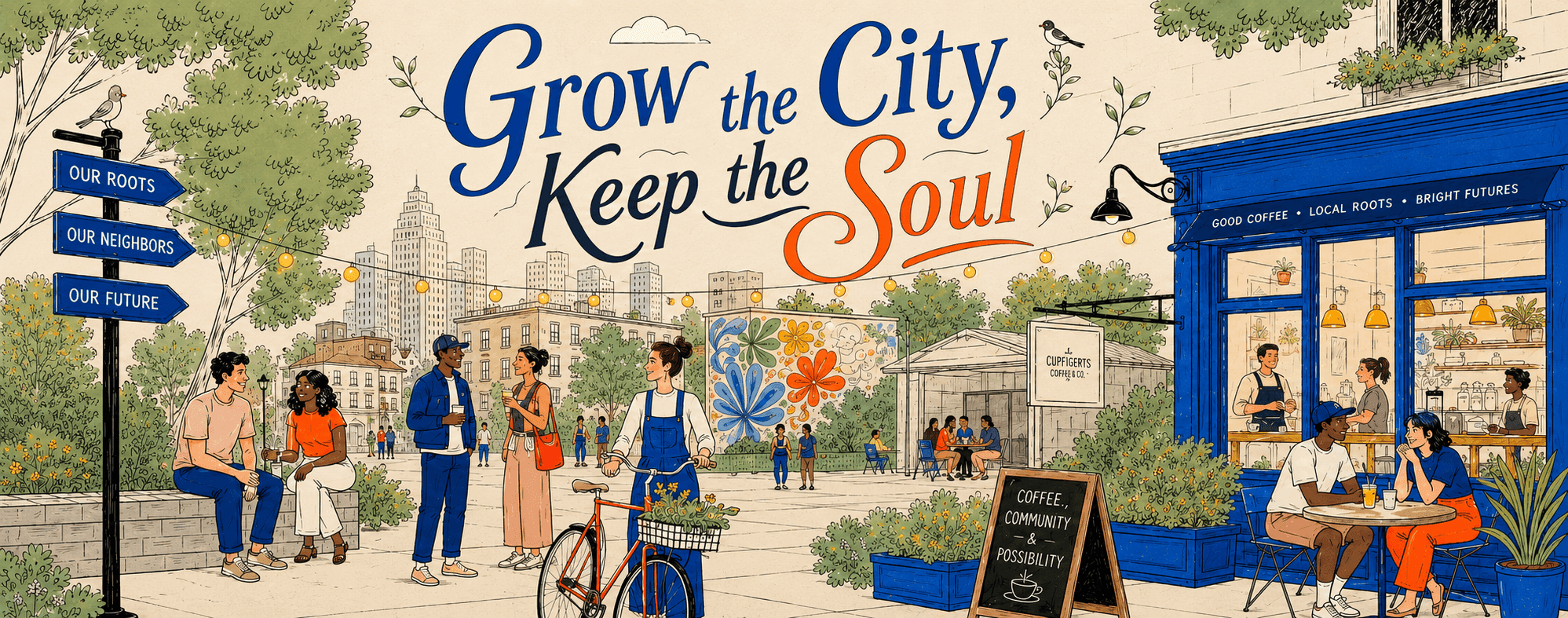
Quality Without Exclusion: Upgrading Commercial and Hospitality Spaces Without Pricing Out the Locals
There's a familiar and painful pattern in urban upgrades: a neighborhood gets "improved" — better shopfronts, nicer cafes, polished public areas — and within a few years, the very residents who gave the place its character can no longer afford to use it. The quality goes up, the soul goes out. This is the central tension in commercial and hospitality upgrades: how do you raise the experience without raising the exit price for the people who live there?
This isn't a minor design footnote. It's the difference between genuine locality enhancement and slow-motion displacement dressed up as progress.
Why Quality and Affordability Are Treated as Opposites — and Why They Don't Have to Be
The default assumption is that better finishes, better service, and better ambience necessarily cost more, and that cost gets passed to the customer. This is true only when quality is pursued through the most capital-intensive, brand-driven route — premium fit-outs, franchise pricing models, high-rent flagship formats. It's not true when quality is pursued through design intelligence, operational efficiency, and community-anchored business models instead of price escalation.
Raising the *quality of experience* and raising the *price of entry* are two separate levers. Conflating them is a design and policy failure, not an economic law.
What "Quality" Actually Means for a Local
Ask a longtime resident what would improve their local high street or neighborhood market, and the answer is rarely "make it more expensive." It's usually:
- Cleaner, better-lit, more comfortable spaces to sit and linger
- Safer, more dignified vending and service conditions for shopkeepers and staff
- Better hygiene and infrastructure (ventilation, drainage, waste management)
- A more pleasant sensory experience — shade, seating, less noise, less visual clutter
- Reliability and consistency, not luxury
None of these inherently require premium pricing. They require investment in *infrastructure and design*, not in *brand positioning*.
The Lifestyle Payoff
When this is done right, the payoff isn't just economic — it's textural. Locals get:
- A place that feels dignified to spend time in, not just pass through
- Continuity of the businesses and faces they've always known, now operating in better conditions
- A stronger sense of ownership over the upgrade, because it was built *with* them rather than *around* them
- Genuine lifestyle enhancement — more comfortable daily errands, safer evenings out, better everyday hospitality — without becoming a lifestyle only visitors or wealthier newcomers can afford
This is what separates authentic locality enhancement from cosmetic gentrification: the improvement is legible in the daily lives of the people who were already there, not just in the photographs used to market the neighborhood afterward.
The Governance Piece
As with crossroad and street-level interventions, this kind of upgrade needs to be built into the bylaw and permitting framework from the start — rent-review caps tied to public investment, vendor protection clauses in municipal beautification grants, and community review boards with real veto power over pricing shifts. Quality that isn't legally anchored to affordability commitments tends to drift toward exclusivity within a business cycle or two, no matter how good the original intentions were.
The goal isn't a neighborhood that looks better in a listing photo. It's a neighborhood that *feels* better to the people who already call it home — every single day, at the same price they could always afford.